
Exploring How Wood Pellets Are Made
Compressed wood pellets may be little, but they hold the key to a future of sustainable power production beyond coal.
Wood has been utilised as a fuel for tens of thousands of years, but compressed wood pellets represent a breakthrough opportunity. Overall, wood pellets are a type of biomass densification fuel generated from biomass raw materials such as forest cuts and building debris.
Moving forward, we will explore the steps that cover the process of manufacturing wood pellets.
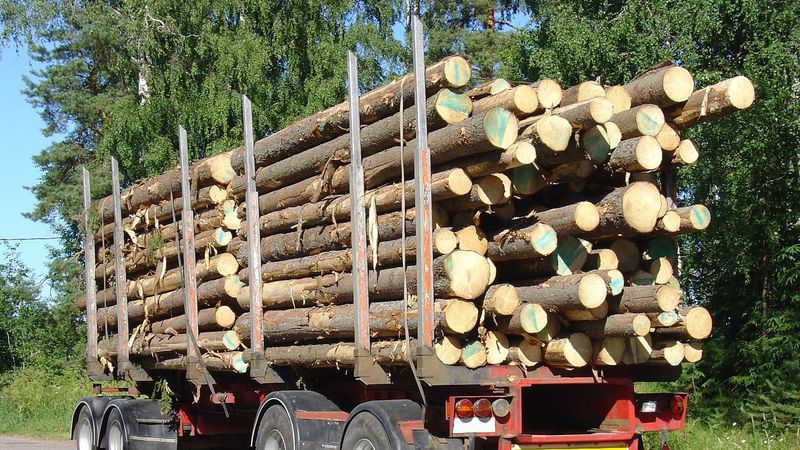
1. Wood’s Arrival At The Yard
By processing these raw materials in the same manner, the final product has a uniform moisture content, heat value, ash content, and burning properties. All pellet producers must create pellets of the same quality to ensure that pellet appliances burn and heat uniformly.
The truck transports wood to one of four locations: the wood storage yard, the wood circle (where wood is prepared for processing), the sawdust and woodchip heaps, or directly into processing.
2. Removing Bark & Preserving for Fuel
Logs are put into a debarking machine, which removes the bark by beating the logs inside a big drum. The bark is set aside and used as fuel for the woodchip drier, which is utilised later in the process.
3. Reducing the Size of the Raw Material
When the raw materials are ready, the first step for a big pellet factory is raw material size reduction. The raw materials for wood pellet production must have a diameter of less than 5mm, thus, logs and branches must be reduced in size.
At this step, the big pellet mill often employs the woodchipper, which is a standard piece of equipment for size reduction that can reduce wood logs and branches to wood chips with a diameter of no more than 40mm for further processing.
In contrast, this step is not required for the tiny pellet factory. If the pellet factory uses wood shavings as raw material, then the raw materials have already been split into tiny pieces in the sawmills, therefore, the woodchippers are not required.
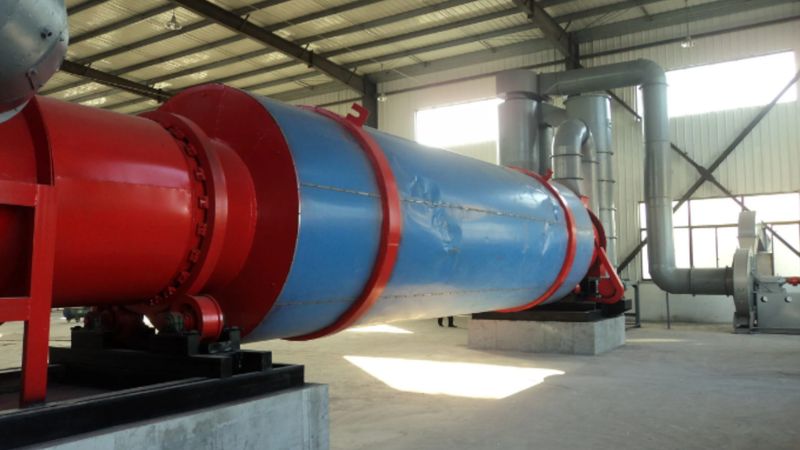
4. Drying the Wood Chips
Suppose a pellet mill employs freshly cut raw material, material exposed to the elements or high humidity, or a mixture of raw materials that may retain moisture. In that case, the sawdust must be dried to a constant moisture level. Large dryer drums may use natural gas, propane, sawdust burners, or other fuels to heat the drum and remove excess moisture.
Before entering the pelletisation process, the moisture content of the wood chips must be between 11.5% and 12%. Anything else than this might damage the quality of the pellets produced. Hence, the chips enter a big drum, blasted with hot air created by a heater fuelled by debarking bark. A powerful fan moves the chips through the drum in preparation for the hammer mill.
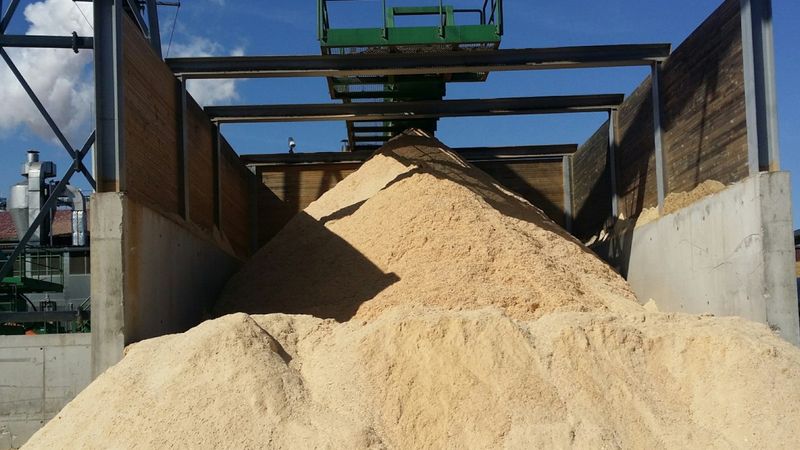
5. Grinding - Entering the Wood Pellet Hammer Mill
Grinding is required as a further size reduction stage in wood pellet production. During the grinding operation, the raw materials will be put into a hammer mill, which will reduce the size of the raw materials to under 5mm in diameter.
However, the hammer mill can only handle raw wood materials with a diameter of no more than 50mm; hence, wood logs and branches cannot be put directly into the hammer mill; they must be treated by the wood chipper first.
Moreover, a set of hammers are affixed to a rotating shaft inside the hammer mill. The wood chips are subsequently fed into the top of the drum, where they are chipped and shredded by rotating hammers into a fine powder used to manufacture pellets.
6. Pelletisation of the Wood Pellets
Afterwards, the powdered woodchips are introduced into the pellet mill to commence the pelletisation process. A spinning arm forces the powdered wood fibres through a grating with many tiny pores. As the wood fibre goes through the perforations in a metal ring die, the extreme pressure warms it and causes it to bond together, generating compressed wood pellets.
7. Cooling the Pellets
After pelletisation, wood pellets are very vulnerable. It has been repeatedly compressed in the pellet mill, making it hot and easily distorted. Immediately after the pelletisation process, the wood pellets will be put into a pellet chiller to restore their optimum firmness and temperature. There are three varieties of pellet cooler: the horizontal cooler, the vertical cooler, and the counter flow cooler. All of them may be used to chill wood pellets. However, the most sophisticated pellet cooler on the market is the counter flow cooler, which I suggest.
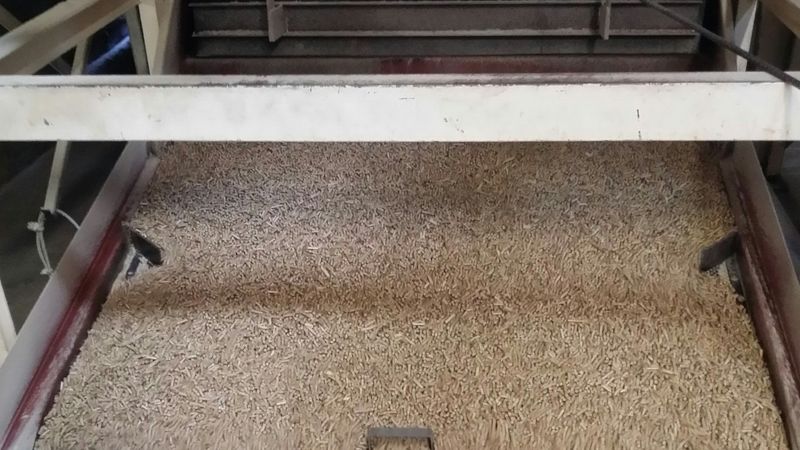
8. Finalising with an Additional Sieving
Bottom Line
For heating purposes, wood pellets emerge as an ecologically beneficial alternative to fossil fuels. Most of the time, they are utilised in biomass boilers to provide household heat and hot water. Moreover, they are also utilised as a zero-carbon fuel for heat-generating and industrial

Outstanding Customer Service
Our helpful staff is ready to assist with any queries you may have.

Free Delivery
We offer free standard delivery for all products on Whitehorseenergy.co.uk. Premium 1-Day service available.

Award Winning Service
We have won the Feefo Platinum Service Award again in 2024.

Buy Now, Pay Later
Use PayPal to split your purchase into interest-free payments.